
How Anglo-American Construction Culture Is Reshaping Data Center Construction in Germany
Under the influence of international hyperscalers, the development of data centers in Germany has evolved from a trade-oriented construction process into a highly integrated production system. In this system, the general contractor does not primarily assume the role of a traditional contractor, but rather that of an orchestrating system that integrates planning, procurement, and execution into a robust overall structure. This role arises not from organizational preference, but from the need to make different logics compatible with one another: German standards and contractual structures on the one hand, and globally standardized project models on the other.
Established German project models are based on clearly defined scopes of work, sequential phases, and a strict separation between planning and execution. This model is designed to minimize risk through detailed specifications.
Hyperscaler projects, by contrast, follow a logic of controlled ambiguity. Decisions are made earlier, planning statuses remain flexible for longer, and execution begins based on reliable but not final information.
The general contractor acts as an intermediary between these systems. The contractor structures the planning so that it remains compatible with international supply chain logic without violating the regulatory requirements of the German market.
The key shift lies in integration. Planning is no longer a separate, upstream phase but rather an integral part of a continuous process that is closely intertwined with procurement and construction execution. To this end, the general contractor assembles a cohesive team of specialist planners, contractors, and suppliers that is organized not according to traditional trade-based logic but rather according to systems and functions. Electrical engineering, cooling, construction, and control technology are not considered in isolation but as interdependent subsystems of an overall model. The quality of project execution depends less on the optimization of individual trades than on the stability of the interfaces.
The significance of these interfaces is shifting. While the traditional model aims to resolve them through detailed planning, in the hyperscaler context they are deliberately retained as control points. The general contractor defines them early on, assigns clear responsibilities for them, and maintains them consistently throughout the entire project. Changes are not avoided but are incorporated into this structure in a controlled manner. This results in a different approach to the level of detail in planning: what matters is not the completeness of the documentation, but its compatibility with downstream decisions and processes.
Collaboration with German subcontractors requires a targeted adaptation of working methods.
Many contractors rely on complete construction drawings before they can perform their work. In the hyperscaler environment, this expectation shifts. Services are commissioned based on defined scope of work and functional requirements, while detailed designs are developed in parallel with construction.
The general contractor is responsible for stabilizing this shift by establishing clear guidelines for the level of detail in planning, approvals, and responsibilities. Without this structure, uncertainties arise that directly translate into schedule and cost risks.
Roles such as BIM Manager, Design Manager, Commissioning Manager, and Package Manager—as well as additional specialists for health and safety, quality, schedule management, document management, and interface coordination—are not merely supplementary functions but firmly established management roles.
Another structural difference lies in standardization.
Hyperscalers work with globally developed design templates that enable a high degree of repeatability. These blueprints define not only technical solutions but also processes, verification mechanisms, and documentation requirements.
Here, the general contractor does not play a creative leadership role in the traditional sense, but rather an adaptive one. This role involves translating the specifications into the local context, verifying their compliance with standards and permitting requirements, and integrating them into the supply chains of the participating companies. The focus is not on developing new solutions, but on implementing existing specifications within local constraints, combined with integrated value engineering to optimize the details.
The dynamic nature of these projects leads to a reassessment of time. Construction timelines are shortened, planning and execution phases overlap, and decisions are made under greater time pressure. The general contractor stabilizes this system through clear decision-making structures and defined escalation pathways. Delays rarely result from technical problems, but rather from unclear responsibilities or a lack of decision-making authority at interfaces. Management therefore relies less on traditional schedules and more on continuously ensuring the ability to make decisions.
This results in changing requirements for the disciplines involved. Specialized planners lose their isolated role as sole authors and become part of an integrated production process.
Contractors assume responsibility for planning tasks earlier in the process and must adapt their internal processes accordingly. At the same time, dependence on functioning supply chains and standardized components increases. The general contractor consolidates these dependencies and makes them manageable.
This development does not lead to simplification, but rather to a consolidation of requirements. Complexity is not reduced, but rather shifted—away from the technical detail of individual components toward the mastery of processes, interfaces, and dependencies.
In this environment, a general contractor’s effectiveness does not stem from size or individual competencies, but from the ability to establish a consistent system that remains stable under time pressure and integrates different logics.
About the authors
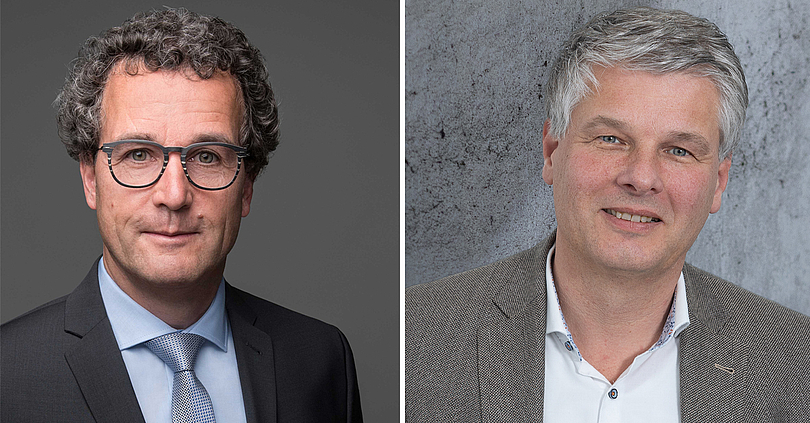
Johannes Weitzel has led Max Bögl’s Data Center MEP division for two years and previously spent 30 years managing the integrated planning of complex large-scale projects.
Ulrich Terrahe, Founder and Managing Director of dc-ce RZ-Beratung, has developed innovative solutions for energy-efficient data centers for over 25 years.
About Max Bögl
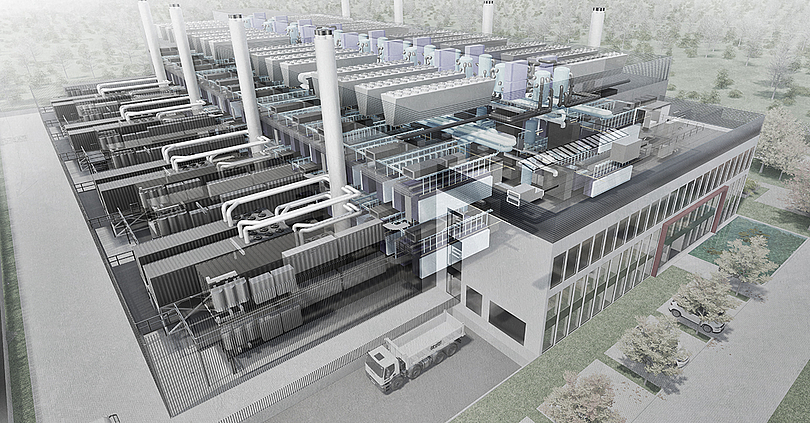
The Max Bögl Group is one of Germany’s leading construction and technology companies. Thanks to its high level of vertical integration, industrial prefabrication, and in-house logistics, the company efficiently and reliably executes complex large-scale projects. In the data center sector, Max Bögl develops and builds turnkey solutions from a single source.
Together with its affiliated partner company, dc-ce RZ-Beratung, the Max Bögl Group offers a comprehensive range of services for data center projects.
What will shape the German data centre market in 2026/27?
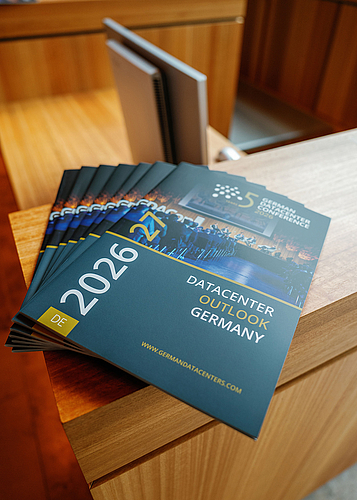
The Datacenter Outlook Germany 2026/27 combines market analysis, political perspectives and insights from across the entire data centre ecosystem. Insights and assessments from experts in the data centre sector on developments, obstacles and trends, as well as articles on the current political positions of the German Datacenter Association, round off the overall picture.
Download the full Datacenter Outlook Germany 2026/27 as a PDF