

Since as far back as 2006, the regulation of fluorinated greenhouse gases under the F-Gas Regulation has had a fundamental impact on the technological direction of air conditioning systems. With the latest amendment (EU) 2024/573, this development will reach a provisional peak next year. The legislator is once again drastically accelerating the phase-down and, from 2027 and 2030 respectively, will impose GWP limits of less than 150 on certain system designs that are also used in data centers.
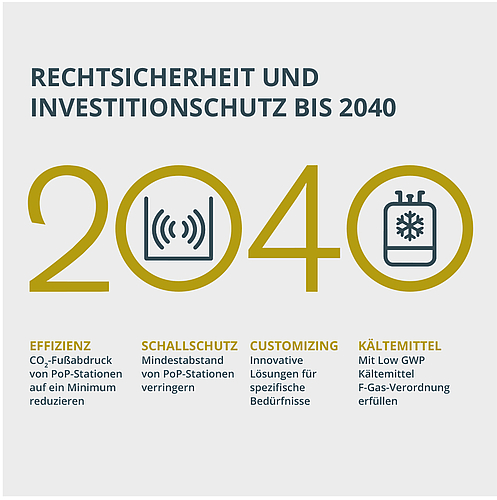
Recent developments, such as the integration of AI systems and ever-increasing power densities in data centers, make it clear that air conditioning has long since moved beyond its status as a secondary discipline within data center infrastructure. Today, it forms a critical backbone for high-availability IT infrastructures and is crucial to the overall efficiency, competitiveness and basic feasibility of modern data center projects. Data center operators are therefore faced with a strategic decision on which direction to take. Simply replacing individual components is not an adequate long-term air conditioning solution. Today, to ensure that infrastructure is competitive and compliant with the law by 2040, a holistic, systems-based approach is essential. Meanwhile, factors such as the choice of refrigerant, operational reliability, energy efficiency and noise insulation must work together seamlessly. Those investing in refrigeration today are also investing in regulatory compliance and site compatibility, which extend far beyond the next deadline set by current regulations.
Flexible refrigerant strategy protects investments
The air conditioning market demands investment-safe and, above all, practical solutions to handle future regulations. With a GWP of 148, the R454C refrigerant offers a compact yet efficient solution for operating DX systems. As an A2L refrigerant, it is flame-retardant and can be easily integrated in data centers with the appropriate safety equipment. Compared with the more flammable A3 alternatives, A2L refrigerant also requires significantly fewer structural and technical safety measures in many DX applications. Existing system architectures can also be retrofitted for low-GWP operation with relatively straightforward modifications. The STULZ systems of the CyberAir 3PRO DX series show how this architecture has been translated into highly efficient, secure and practical system operation. R454C is definitely no longer a provisional solution. Rather, it forms a strategic building block for a refrigerant strategy that is both compliant with regulations and technically manageable. At the same time, however, the forward-looking infrastructure planning also requires a consistent focus on natural refrigerants. In this context, R290 is establishing itself as a practical solution, both in terms of environmental sustainability and basic thermodynamic efficiency. The combination of chillers featuring R290 technology and water-cooled indoor units has proved particularly effective in recent large-scale projects. Even in the modular data center sector, operators now often explicitly request propane. A hybrid portfolio of solutions could therefore be the strategic response to an accelerated phase-out. R454C is suitable for compact DX applications; R290 enables future-oriented, centralized chilled water generation.
System architecture that extends beyond refrigerant
In the field of cooling technology, looking at individual components in isolation always carries risks in terms of operating costs and system compliance. That is why, today, sustainable air conditioning solutions are characterized, in particular, by the intelligent interplay of all key system factors. To ensure resilient plant operation, basic parameters such as operational reliability, noise insulation and the refrigerant strategy employed must be integrated directly into the cooling technology design. Energy efficiency also remains a crucial factor. Minimum requirements are set by the German Energy Efficiency Act (EnEfG), among other legislation. In order to reliably comply with these legal requirements, the cooling system – as the largest secondary consumer in the data center – must only incur minimal additional energy costs. Even low-GWP solutions must demonstrate their performance in 24/7 operation under these new conditions. However, alongside energy efficiency, noise insulation is also becoming ever more important in the data center sector. Low-noise systems with an LWA value of less than 80 dB(A) can play a significant role in ensuring the acceptance of new sites. Voluntary noise abatement measures should also be regarded as a sensible investment, as they reduce legal risks and enhance public acceptance.
Liquid Cooling as a key technology for modern high-performance IT
Artificial intelligence and edge computing are driving a massive increase in rack density. When heat loads exceed 130 kilowatts per rack, air cooling reaches its physical limits. The widespread or hybrid use of Liquid Cooling is therefore inevitable. Advanced direct-to-chip solutions are already capable of directly cooling around 75 percent of IT workloads. The remaining 25 per cent, which stems from the operation of power supply units and cable losses, is handled by air-based precision air conditioning systems. In high-performance scenarios such as this, Coolant Distribution Units (CDUs) such as the CyberCool CDU from STULZ act as the technological heart of the system. They form the interface between IT-related Liquid Cooling and the building’s chilled water infrastructure. The systems control the flow rate, system pressure and temperature distribution entirely autonomously. At the same time, they ensure seamless system filtration and continuous monitoring. Modular solutions with integrated Coolant Distribution Unit reliably dissipate heat loads of around 1,550 kilowatts per unit.
Whilst regulatory pressure on data centers is increasing worldwide, this shift also presents an opportunity for operators to thoroughly optimize their data center infrastructure. Those who plan their architecture with a view to the future can minimize regulatory risks, save on energy costs and thus remain competitive for the long term.
About the author
Peter Wäsch, a graduate electrical engineer, is Head of Modular Datacenter & MDC Germany and has been with the company since 2023. His many years of international experience in management positions within the data centre industry and his expertise in the field of modular data centres make him a key figure in this segment.
About the company
STULZ is a global provider of innovative, mission-critical cooling solutions. Founded in 1947 and with its headquarters in Hamburg, Germany, it is represented by 33 production and sales companies, a network of more than 150 partners and produces in 8 countries. Its solutions provide precise temperature and humidity control, as well as reliable cooling capacity, to safeguard the operation and longevity for data centers, telecom infrastructure and industry.
What will shape the German data center market in 2026/27?
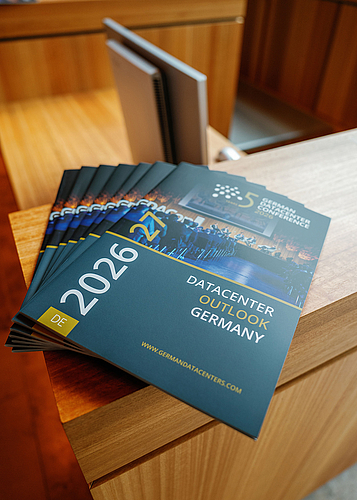
The Datacenter Outlook Germany 2026/27 combines market analysis, political perspectives and insights from across the entire data center ecosystem. Insights and assessments from experts in the data center sector on developments, obstacles and trends, as well as articles on the current political positions of the German Datacenter Association, round off the overall picture.
Download the full Datacenter Outlook Germany 2026/27 as a PDF