
Why Germany Needs a New Alliance Between Federal Government, States, Municipalities and the Data Center Industry
Digital sovereignty has become one of the key strategic objectives for both Germany and Europe. The rapid development of artificial intelligence, the growing importance of European cloud solutions and the ongoing digitalization of business and public administration all point to the same reality: any nation that seeks to process, store, and protect data must have access to robust digital infrastructure. Data centers are therefore no longer a peripheral element of digitalization—they are its foundation.
The German Federal Government, the European Union and many state governments have recognized this importance. AI funding programs, initiatives to strengthen European data spaces and investments in digital technologies all pursue a common goal: enabling Europe to become more independent in future technologies and strengthening its digital capabilities.
Yet it is precisely at this point that a remarkable tension emerges. While the need for additional data center capacity is rarely questioned at the national and European levels, the realization of new facilities is becoming increasingly difficult at the municipal level. Approval procedures are growing more complex, competition for land is intensifying, and existing concerns regarding resilient and sustainable energy supply continue to gain relevance. The result is a conflict of objectives that is increasingly slowing the expansion of digital infrastructure.
Political Consensus Often Ends at the City Limits
Today, few would dispute the economic and societal importance of data centers. Without them, cloud platforms, digital government services, Industry 4.0 applications, and AI systems would simply not function. At the same time, demand for computing power continues to grow at an unprecedented pace.
Nevertheless, many project developers and data center operators face increasingly critical discussions at the local level. Municipalities are under pressure to prioritize the use of limited land resources carefully. Housing developments, commercial projects, energy infrastructure, transportation networks, and environmental protection all compete for the same space. In this context, data centers are not always perceived as strategic infrastructure but often as additional consumers of land and energy.
This perspective is understandable, but it frequently falls short of the broader picture. While citizens, businesses and public institutions readily embrace the benefits of digital services, the physical infrastructure required to enable them often remains invisible. The result is a classic dilemma: society demands the benefits of digitalization, but not always the infrastructure necessary to support it.
Energy Is Becoming the Decisive Location Factor
The energy challenge further complicates the situation.
Modern data centers require not only suitable sites but, above all, reliable long-term access to electricity. In economically strong metropolitan regions, grid expansion is increasingly reaching its limits. Access to power connections has become a critical factor in site selection decisions.
At the same time, expectations regarding sustainability and energy efficiency continue to rise. Data centers are expected to operate efficiently, utilize renewable energy sources, and contribute wherever possible to local heat-transition strategies. These requirements are both reasonable and widely supported by the industry. However, additional requirements and lengthy coordination processes often result in significant project delays.
This creates a paradoxical situation: precisely when Germany and Europe seek to expand their digital infrastructure, the conditions required to realize these projects are becoming increasingly complex.
Between Different Worlds
The data center industry therefore finds itself in a unique position. On the one hand, it represents the interests of businesses that urgently require additional capacity. On the other, it must address the legitimate concerns of municipalities, grid operators, residents, and policymakers.
The challenge is not to determine a winner in this conflict. Rather, it is to reconcile different interests and create solutions that serve all stakeholders.
Municipalities need planning certainty and tangible benefits for their regions. Grid operators require long-term visibility for infrastructure expansion. Policymakers need adequate digital infrastructure to support their AI and digitalization strategies. Businesses, in turn, depend on stable and predictable conditions to justify investment decisions.
The success of future data center projects will increasingly depend on the industry's ability to bring these diverse interests together at an early stage.
From Infrastructure Project to Regional Ecosystem
The data centers of the future can no longer be viewed in isolation. They must become part of a broader regional ecosystem.
This includes integration into municipal heat-planning strategies, the utilization of waste heat, innovative energy concepts, the expansion of renewable energy generation, and early coordination with both grid operators and local authorities. The more data centers are understood as components of regional development strategies, the greater the acceptance and planning certainty they will enjoy.
Most importantly, a change in perspective is required. Data centers are not merely consumers of energy and land; they are enablers of digital transformation. They provide the foundation for AI applications, digital services, advanced industrial processes and a significant share of future economic value creation.
The Honest Broker of a Digital Future
Germany faces the challenge of not only demanding digital sovereignty politically but also enabling it through the necessary infrastructure. The expansion of data center capacity is an essential prerequisite for achieving this goal.
This requires intermediaries capable of bridging different interests—actors who can bring together technological requirements, energy policy objectives, and municipal development priorities. The focus should not be on a struggle between digitalization and regional development but on identifying shared opportunities and practical solutions.
The future of digital infrastructure will therefore not be decided solely in Berlin, Brussels, or the boardrooms of technology companies. It will also be shaped in town halls, planning offices, and grid control centers. Anyone seeking to achieve digital sovereignty must find ways to connect these worlds.
The real challenge is not to push data centers through against competing interests. The challenge is to create infrastructure that simultaneously enables technological innovation, energy security and public acceptance. Only then will Germany be able to build the digital infrastructure needed to secure its economic and technological future.
About the author
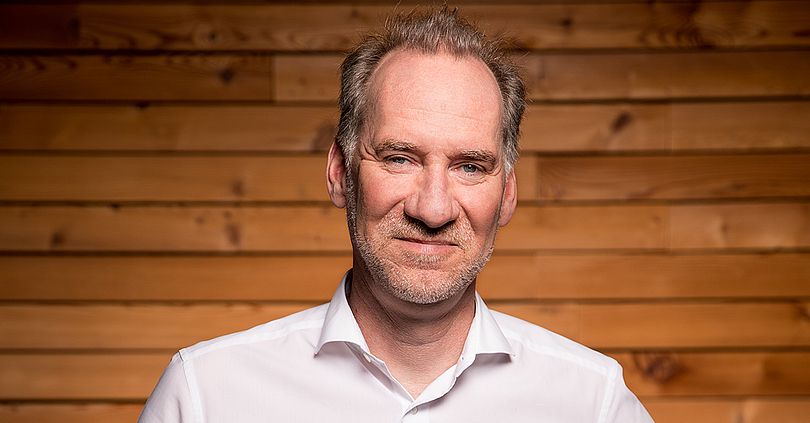
Lars Mostert is Chief Operating Officer (COO) at hyceon. He supports data center developments as a lead planner at the intersection of government, municipalities, energy providers, and industry. His focus is on creating viable solutions that bring together digital infrastructure, energy security, and regional development.
About TTSP HWP / hyceon
TTSP HWP Planungsgesellschaft mbH is an interdisciplinary planning and consulting company specializing in the development, design, and delivery of data centres, as well as complex infrastructure and real estate projects. The company combines expertise in architecture, engineering, master planning, and project management, supporting both local and global clients throughout the entire project lifecycle. Since the merger of TTSP HWP and MCA Architects, the two companies have operated as an integrated pan-European group with offices in Germany and Ireland. Together, they leverage their extensive experience with the brand hyceon, to deliver innovative, sustainable, and energy-efficient solutions for data centre projects across Europe.
What will shape the German data center market in 2026/27?
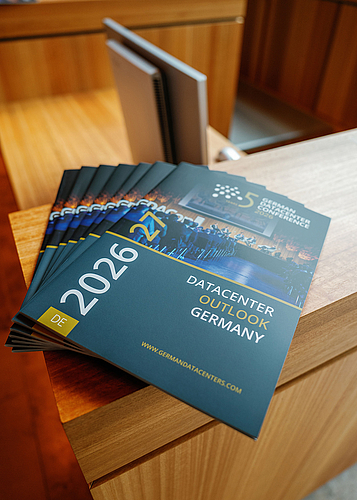
The Datacenter Outlook Germany 2026/27 combines market analysis, political perspectives and insights from across the entire data center ecosystem. Insights and assessments from experts in the data center sector on developments, obstacles and trends, as well as articles on the current political positions of the German Datacenter Association, round off the overall picture.
Download the full Datacenter Outlook Germany 2026/27 as a PDF